- Home
- About Us
- Our Solutions
- Environmental Division
- Waterproofing Division
- Rocky Mountain Bio Products Division
- Bridge Division
- Our Services
- Industries
- Applications



October 13, 2026
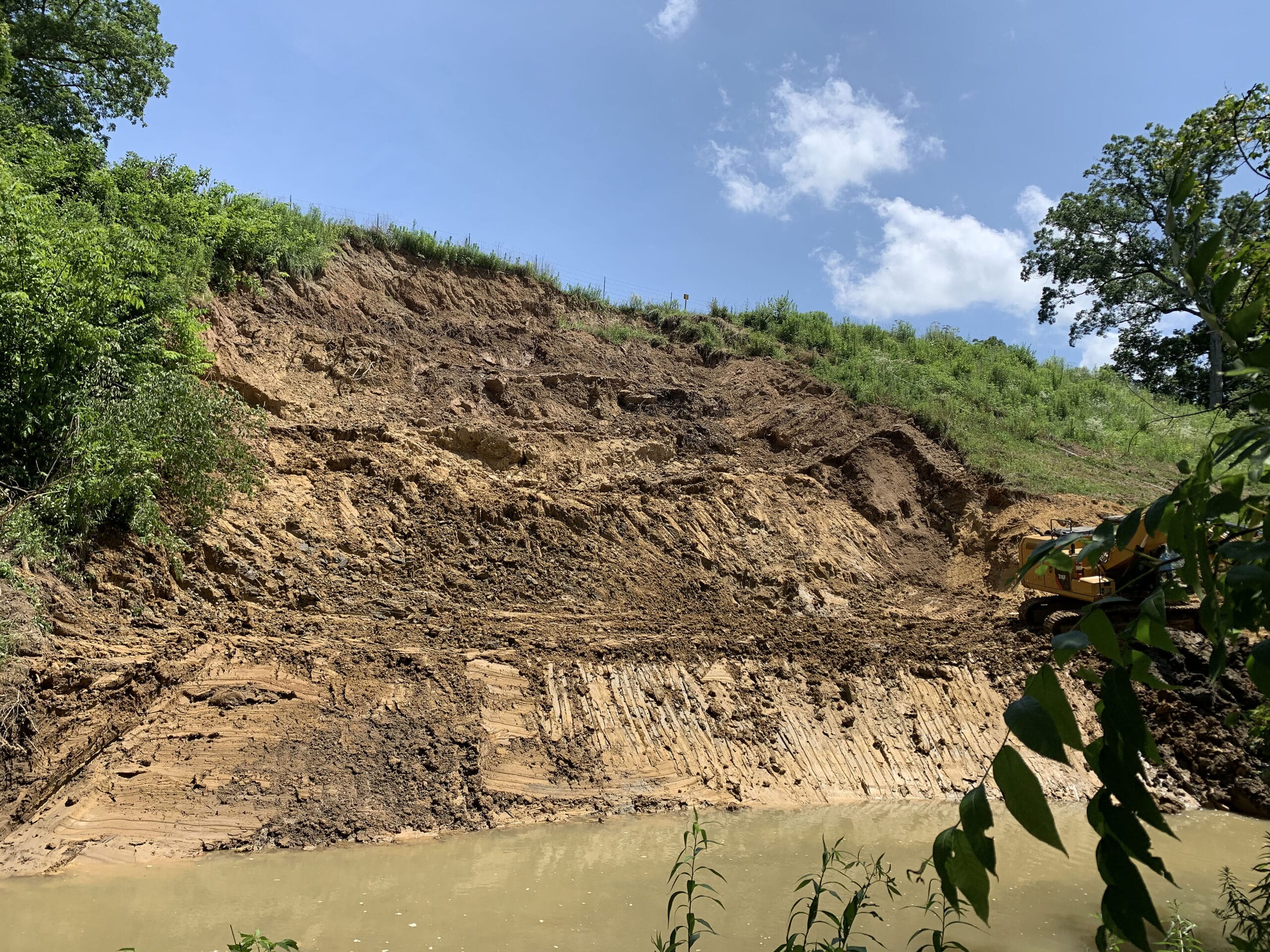
As the summer season ends and fall approaches, construction sites and infrastructure projects have a new set of challenges to face. Although the cooler temperatures are ideal for everyone, increased rainfall, shorter daylight hours, and slow vegetation growth often contribute to increased chances of soil erosion and sediment runoff.
Before seasonal storms arrive, construction teams should evaluate vulnerable areas of the site and confirm erosion and sediment control measures are functioning properly. A fall site review should include:
Taking these steps before wet weather arrives can help reduce maintenance costs, avoid regulatory issues, and keep projects on schedule.
More Frequent Storms:
Across the country, Fall can bring longer rain events and increased storm activity. Due to construction sites being exposed, soil particles often detach and move downhill by runoff. This situation can cause many issues including sediment accumulating in drainage systems, erosion gullies on slopes, damage to newly graded areas, and increased cleanup and maintenance costs.
Reduces Soil Stability:
Since the Fall season is known for having multiple rain events over a short period of time, soils remain saturated, causing a higher chance of erosion. Areas in which the soils can become saturated are more likely to have surface erosion, slope failure, rilling & gullying, equipment rutting, and sediment transport. Steeper slopes are at higher risk because of the increased runoff velocity.
Vegetation Changes:
Most strategies rely heavily on vegetation serving as a defense against soil loss. Decreasing temperatures are the root of several problems for vegetation. As temperature declines, germination slows, root development decreases, existing vegetation becomes dormant, and bare soil is exposed longer than normal. This is where temporary erosion control solutions become essential for construction sites.
Regulatory Compliance Concerns:
As most construction sites operate under stormwater permits, they are required to follow Best Management Practices (BMPs) to control the loss of sediment. If these measures are not put into place, sediment runoff can lead to notices of violations, corrective actions, increased inspections, delays, and additional costs. Proactively installing and maintaining BMPs is less expensive than repairing erosion damage, removing sediment, addressing permit violations, or restoring downstream areas after a storm event.
Project Delays:
If erosion on a construction site does take place, it will set the project back. Erosion typically damages work that has already been done, which requires contractors to spend more time on the project, leading to higher costs. When a site is damaged, crews have to re-establish grades, remove accumulated sediment, repair channels & ditches, and replace the topsoil. These expenses can quickly add up.
Geotextiles & Geosynthetics for Stabilization:
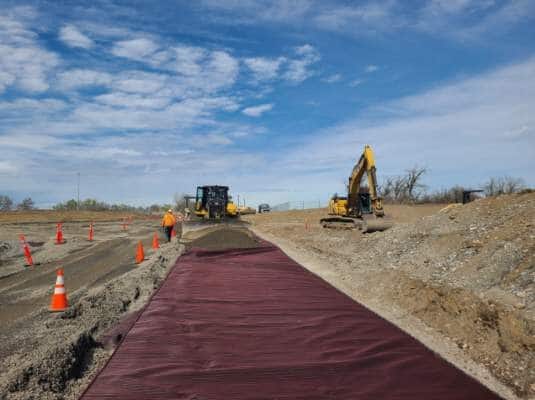
Geotextiles are used to create a foundation for erosion control systems. These materials help stabilize soils and improve drainage by preventing material migration. Geotextiles provide several benefits to job sites, such as soil reinforcement, aggregate separation, filtration & drainage, improved road distribution, and reduced maintenance costs. These can be applied in several scenarios like on roadways, embankments, and retaining wall systems, just to name a few.
Erosion Control Blankets (EBCs):
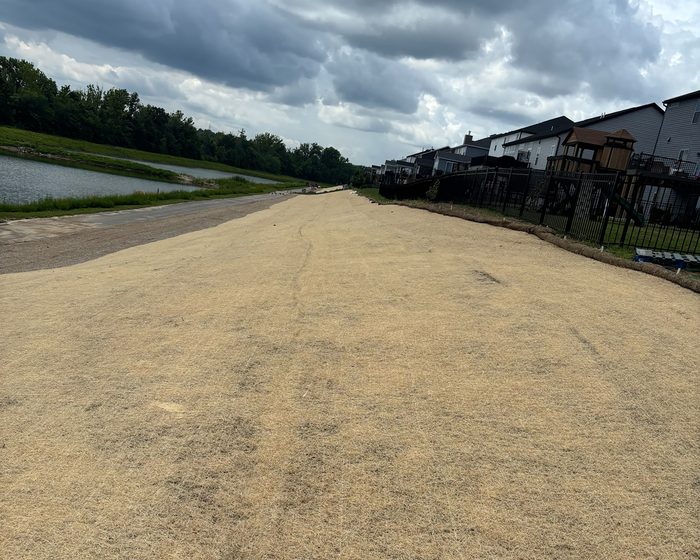
EBCs provide a protective layer on top of the exposed soils, creating a shield from rainfall and runoff while allowing vegetation to establish. These systems can become incredibly valuable in the Fall since vegetation often requires more time to establish before winter. These materials can be used on anything from roadway embankments to drainage channels and disturbed slopes.
Turf Reinforcement Mats (TRMs):
TRMs are a great solution that combines vegetation with permanent reinforcement to provide more long-term resistance against water flow. These solutions are commonly used in stormwater channels, ditches, retention basins, and more to allow vegetation to develop while also providing long-lasting erosion resistance.
Flexamat®:
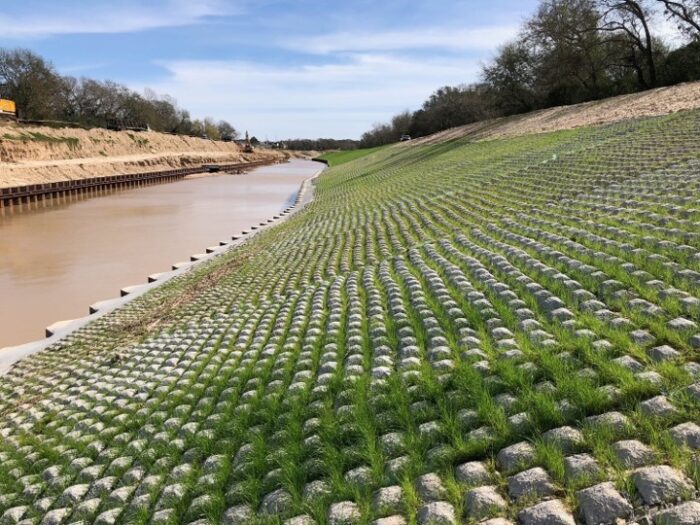
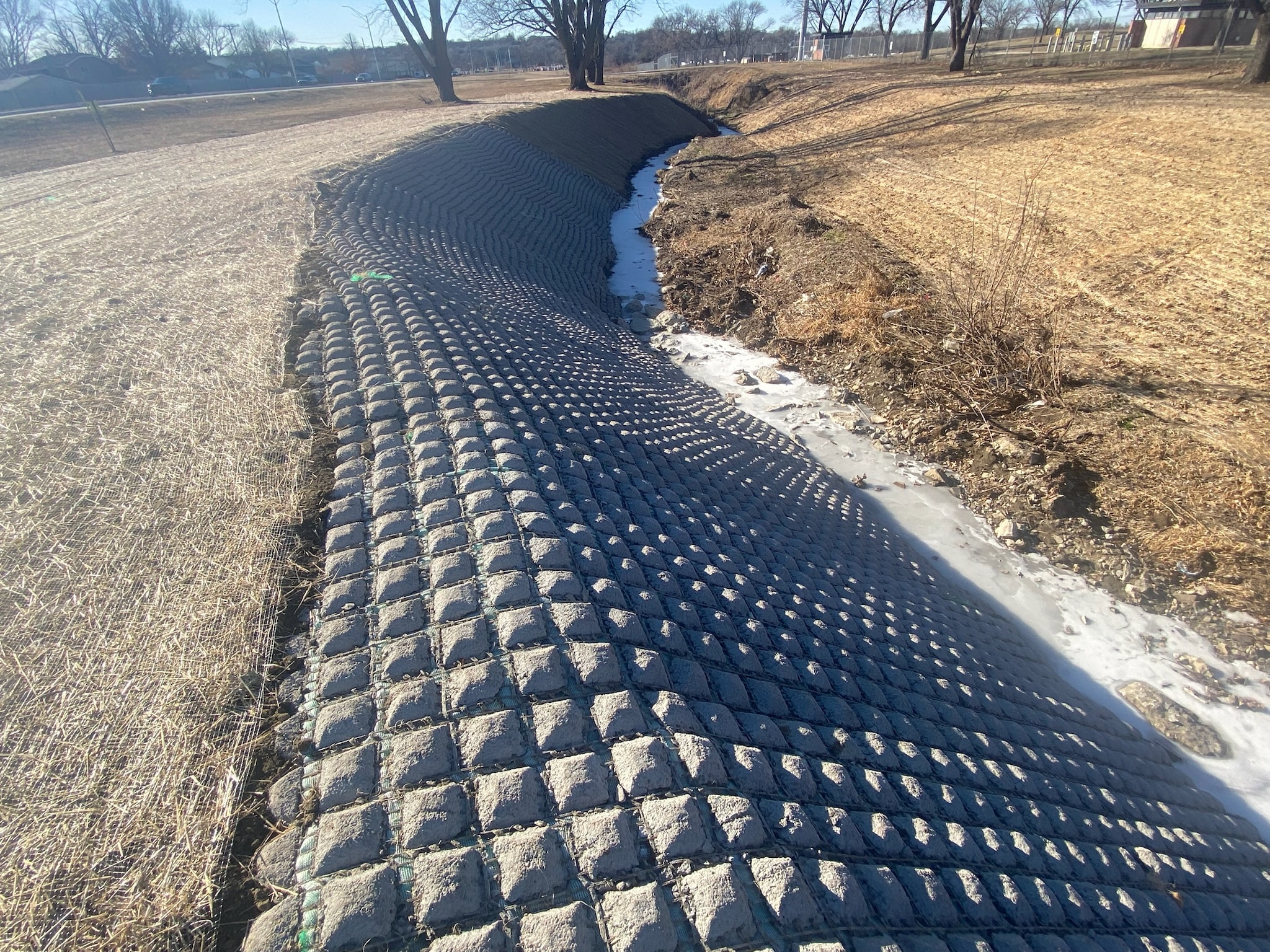
Flexamat® is a concrete block system that protects by combining concrete armor with openings that support vegetation growth. It is commonly used in channels, slopes, and shorelines and able to withstand high-flow conditions while providing a more natural, vegetated appearance.
Silt Fence:
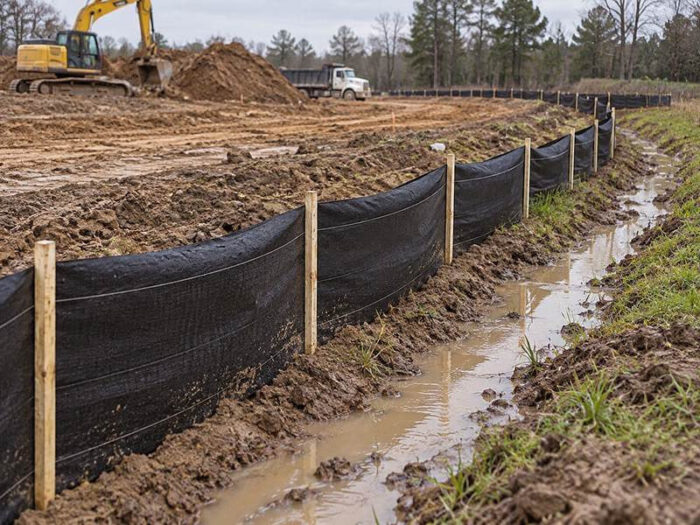
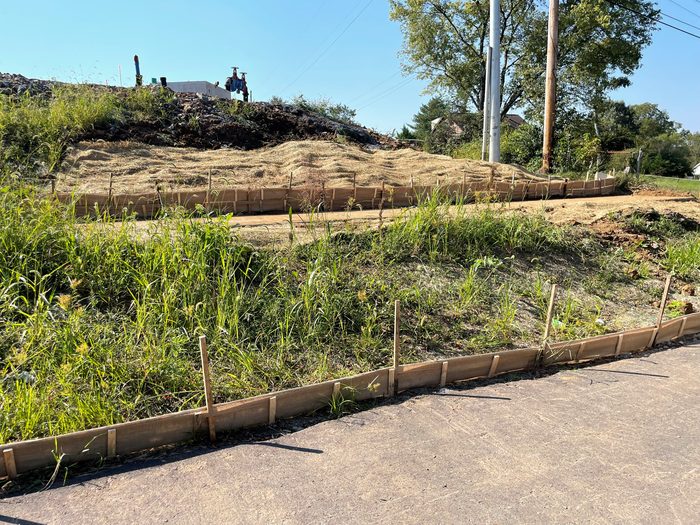
Silt fence is a great sediment control solution used to keep runoff from leaving the construction site. This product is essential to decreasing runoff speed, capturing sediment, reducing off-site impact, and protecting nearby properties.
Filter Socks, Wattles, and Check Dams:
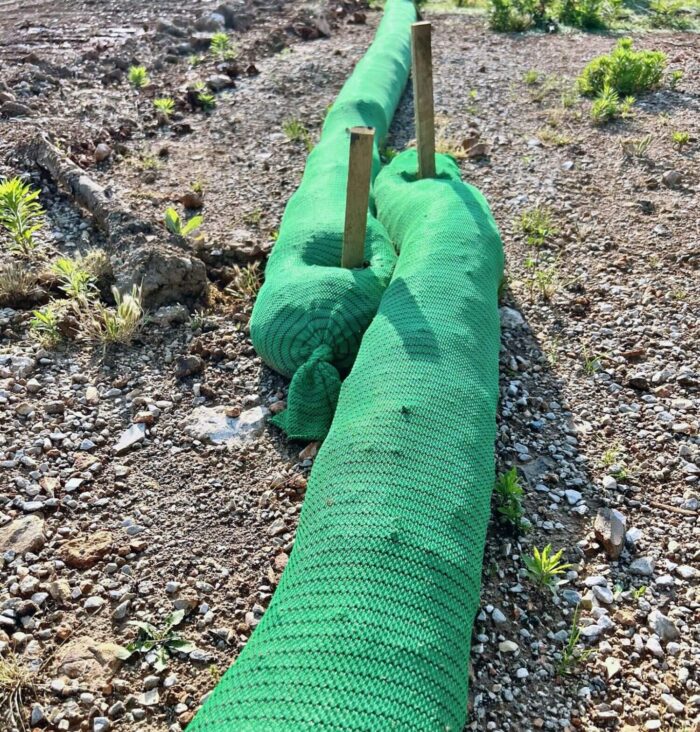
These solutions are great for managing runoff throughout a job site. These products collectively break up flow paths, reduce runoff velocity, and trap sediment.
Proper drainage infrastructure plays a critical role in minimizing erosion on construction sites. Even the best erosion control products can be overwhelmed if runoff is not properly conveyed and managed.
Stormwater systems such as HDPE pipe, culverts, drainage structures, and detention basins help control the movement of water across a site, reducing concentrated flow that can cause scour, slope instability, and sediment transport. When combined with erosion and sediment control BMPs, drainage infrastructure creates a more resilient site capable of handling seasonal rain events.
Don’t wait until the rain starts! Preparing construction sites now, before winter weather and persistent rainfall, reduces the chances of creating larger challenges. By evaluating site conditions, maintaining BMPs, stabilizing exposed soils, and implementing effective stormwater management practices, contractors and engineers can reduce erosion risks, maintain compliance, and keep projects on schedule.
October 6, 2026
Join us for our upcoming Technical Talks webinar! Attendees will learn about industry topics and site solutions ASP Enterprises, Bowman Construction Supply, Cascade Geosynthetics, and Quick Supply Co. provide and receive a Professional Development Hour Certificate for attending. All registrants will receive a link to watch the webinar recording. Innovative Approaches to Slope & Channel […]
September 16, 2026
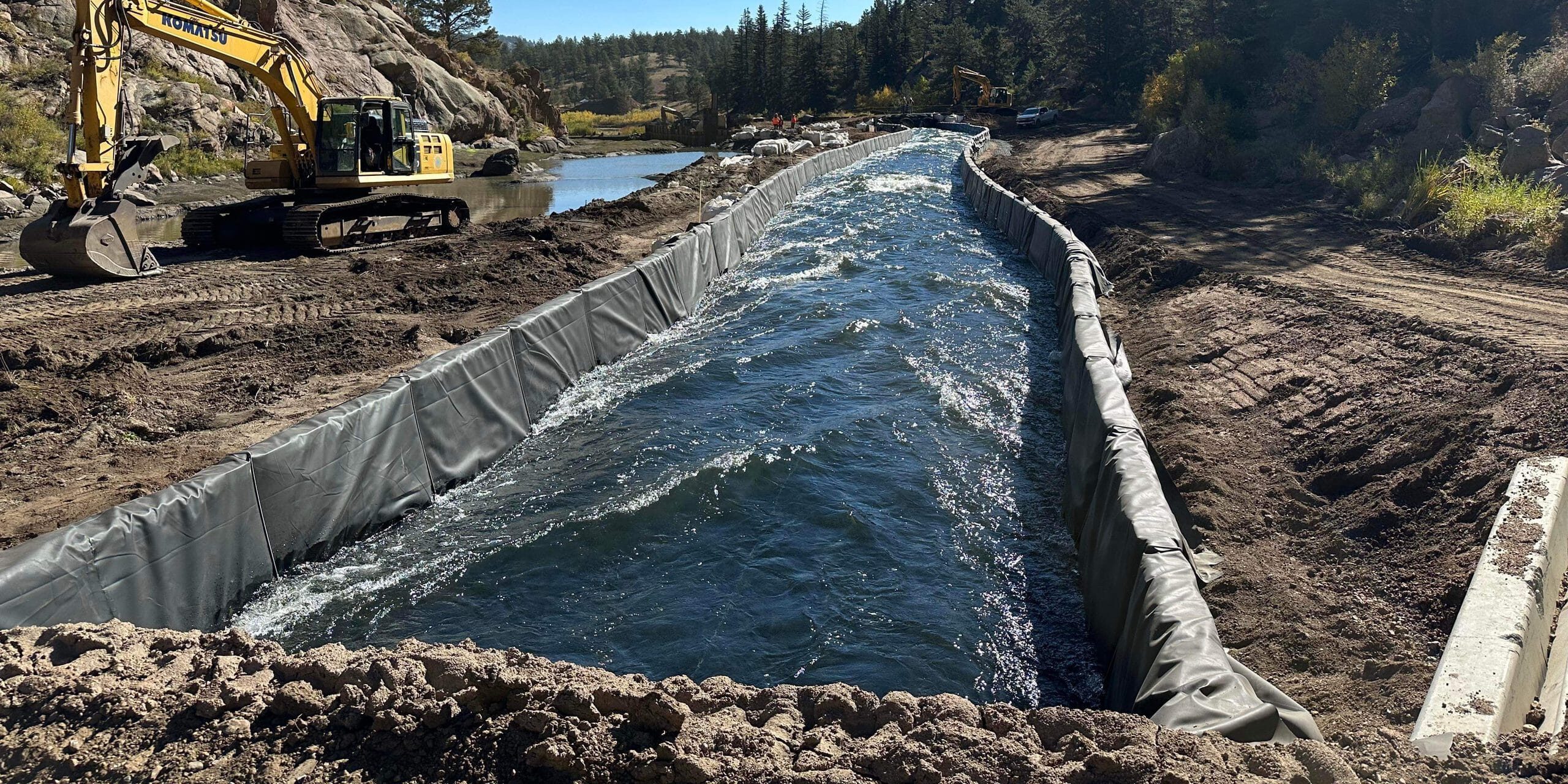
Project Details Project Name: Lake George Dam Removal & Stream Restoration Location: Lake George, Colorado Date of Installation: August 2023 Contractor: FlyWater, Inc. & Naranjo Civil Constructors Salesperson: Mick Pyle, Bowman Construction Supply Application/Solutions: Muscle Wall used for temporary stream diversion The Challenge The Lake George Dam, a 25-foot-tall, low-head concrete diversion structure built in […]

April 8, 2026
Clean & Green 2026 Recap Thank you to everyone who attended our 2026 Clean & Green events! We appreciate each and every one of you who participated in Clean & Green, including our attendees, sponsors, vendors, and speakers. We had a lineup of four successful events and were able to visit Salt Lake City, Pueblo, […]
Learn more about Hale Holdings. Our businesses strive to be nimble and powerful customer partners. We have the right resources to quickly solve challenges and to support our customers’ long-term success.